Bills of materials, production orders and raw material stock for a factory
A manufacturer usually loses control in the gap between the quotation, the production order and the store room. SmartERP ties them together with bills of materials, manufacturing orders that consume components, and scrap that is recorded instead of guessed. It does not schedule machines or run inspections.
Start with Inventory, Manufacturing, Purchase and Sales. Add Accounting for the ledger and CRM for repeat and OEM buyers. Maintenance can follow, for the machine register, once the production records are trusted.
Typical businesses: Food and beverage processors · Plastic product makers · Metal fabrication workshops · Garment and textile makers · Building product factories
Problems this industry runs into
The recipe for a product lives in the foreman's head
Quantities of each material per batch are remembered or written on scraps, so two shifts build the same product from different inputs and its true cost is a guess.
Raw material runs out halfway through a batch
Purchasing hears about a shortage when the line stops, because nobody sees stock against open production orders and the reorder point is only a habit.
Scrap and by-products vanish from the books
Rejects, offcuts and leftovers are thrown away or resold with no record, so the yield of a batch cannot be compared with what the recipe promised.
Made-to-order prices are set from old memory
A repeat or OEM buyer asks for the same item again and a salesperson re-prices it by hand, without today's material cost or the discount agreed last time.
Applications in the Manufacturing edition
These applications are the ones the industry edition's blueprint includes. Each opens its own page.
Often added for this industry
What each application does for custom Industrial Equipment
Accounting
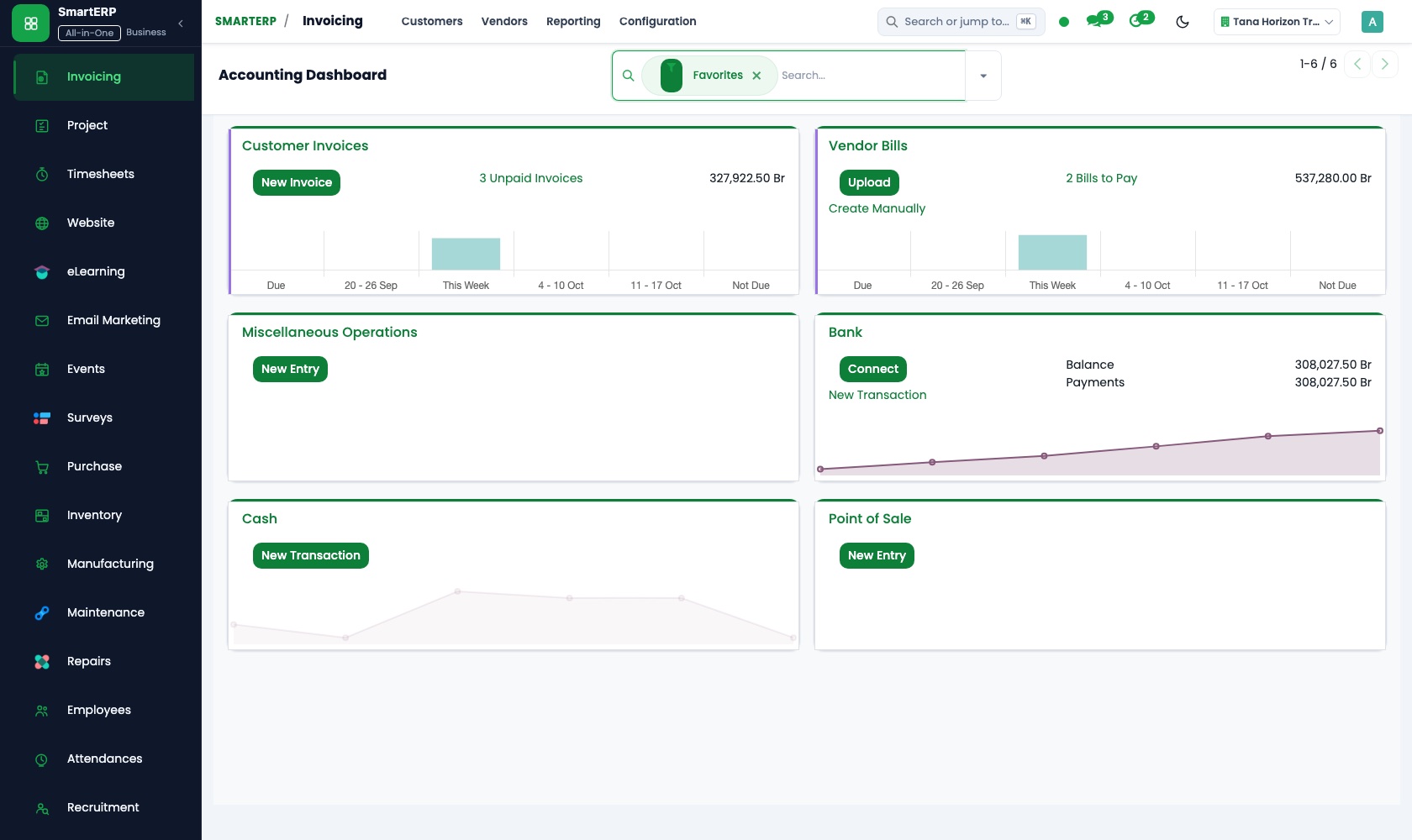
Supplier bills are paid against what actually arrived, by bank transfer or cash. Buyer invoices post to the ledger, and the owner reads profit and loss for the plant.
Manufacturing
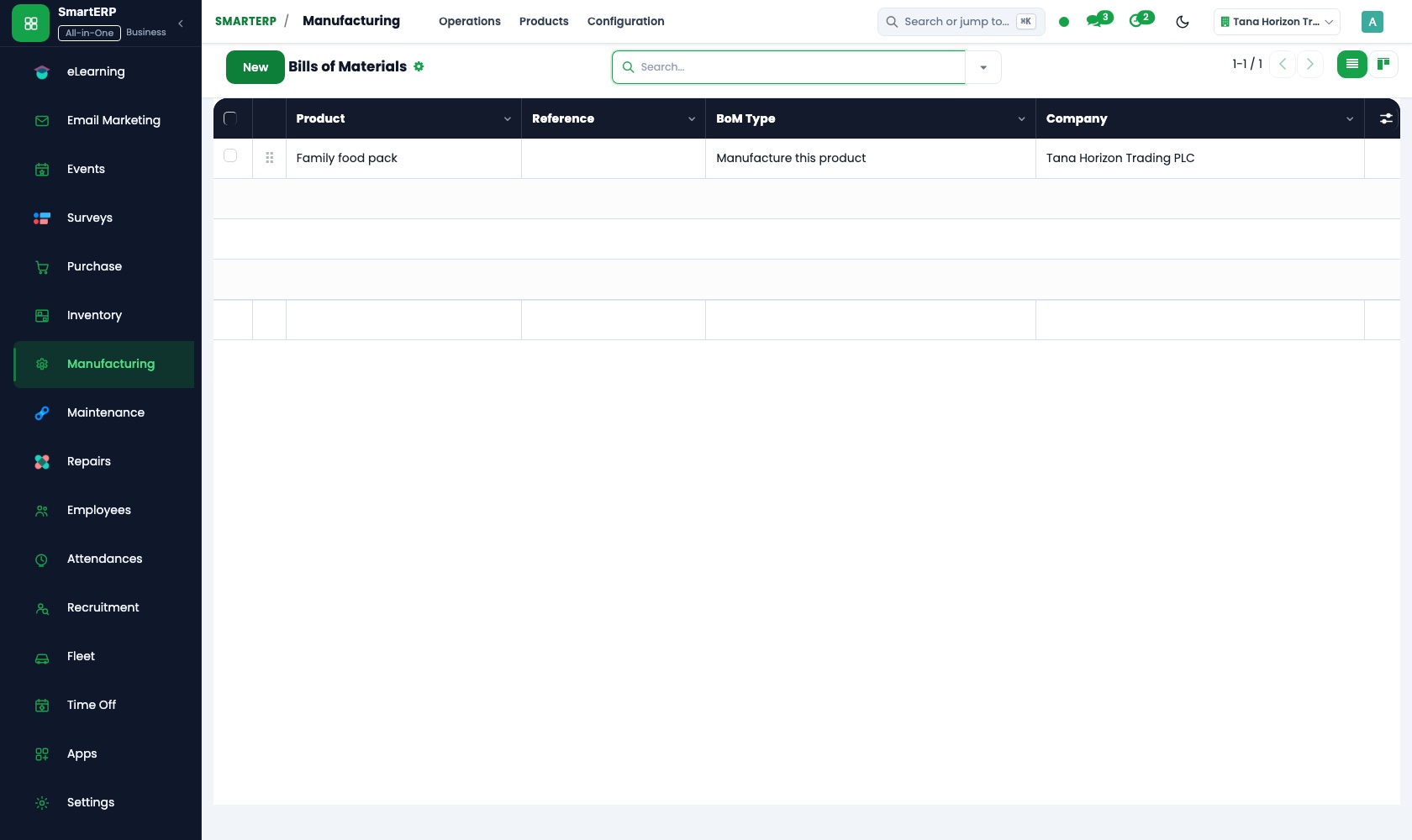
The recipe of each product is a bill of materials. A manufacturing order releases a batch, components are consumed as drawn, and rejects are recorded as scrap.
Sales
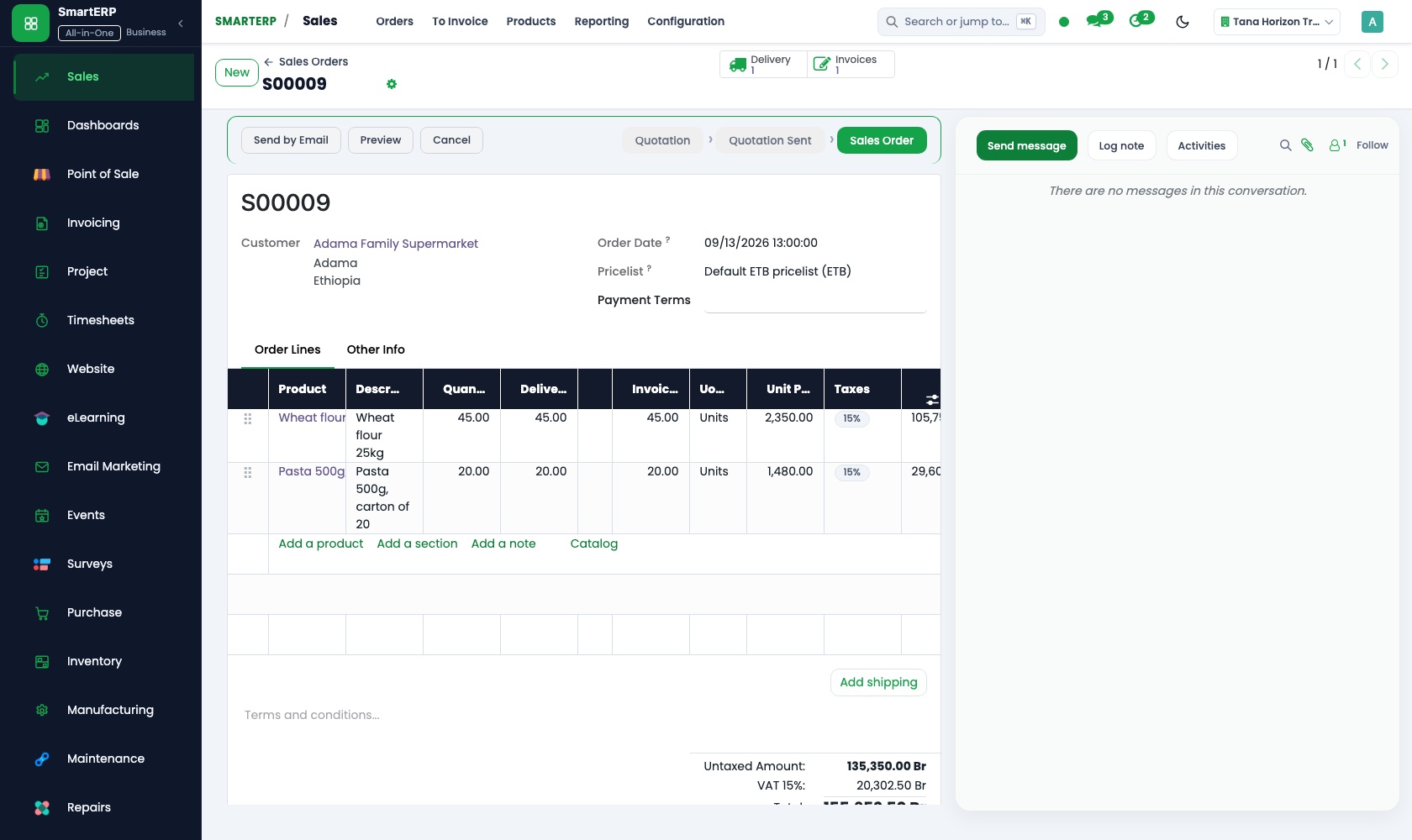
A buyer's specification is confirmed as one sales order the production office can read. Price lists hold what was agreed with a repeat buyer, so a reorder is not priced from memory.
Inventory
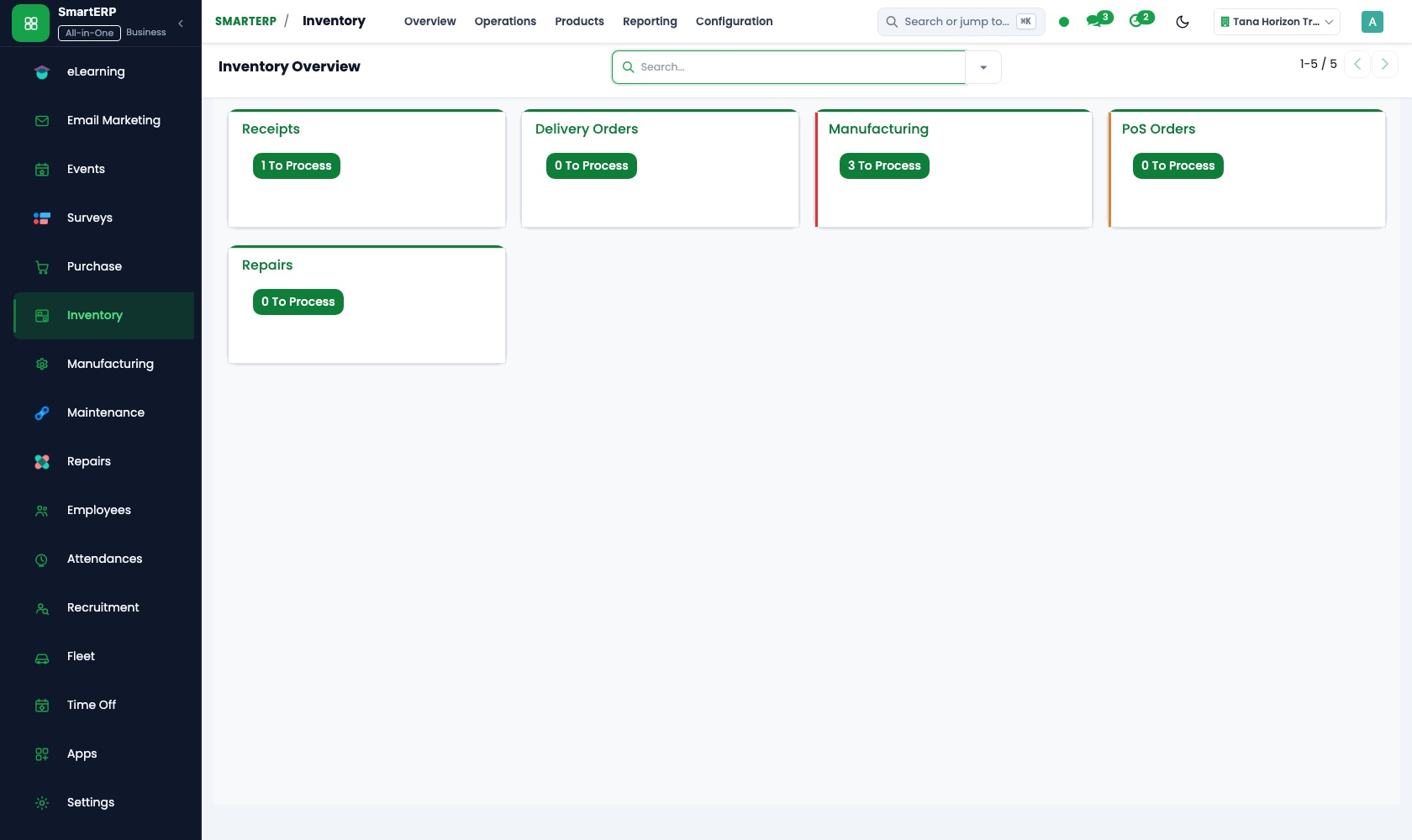
Each raw material has a reorder rule with a minimum, so a shortage is raised before the line runs dry. Goods are received into the raw material store as the truck is unloaded.
Purchase
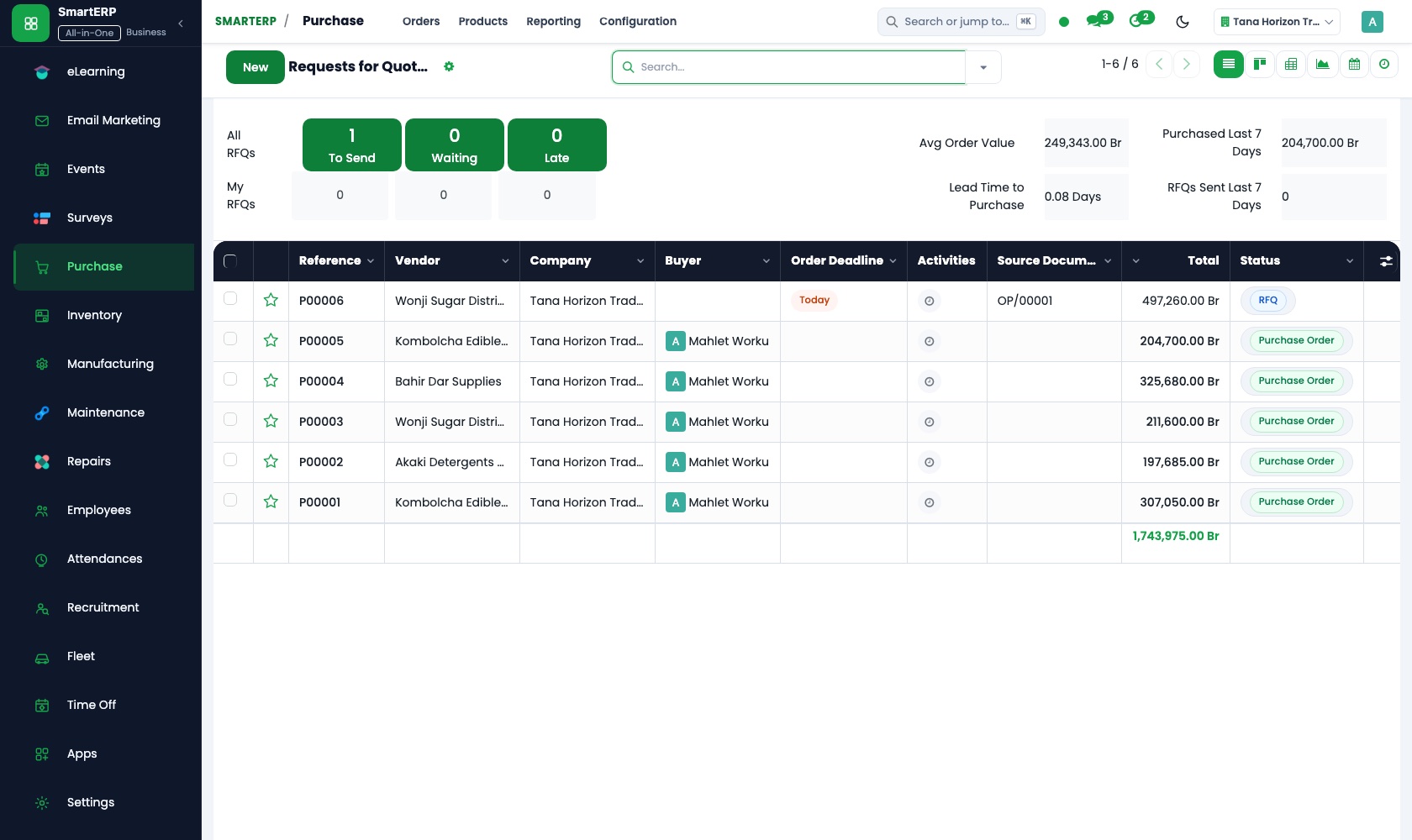
The usual suppliers of resin, flour, steel or thread price the same quantity on requests for quotation. One purchase order goes to the chosen supplier, so stores and finance hold one record.
CRM
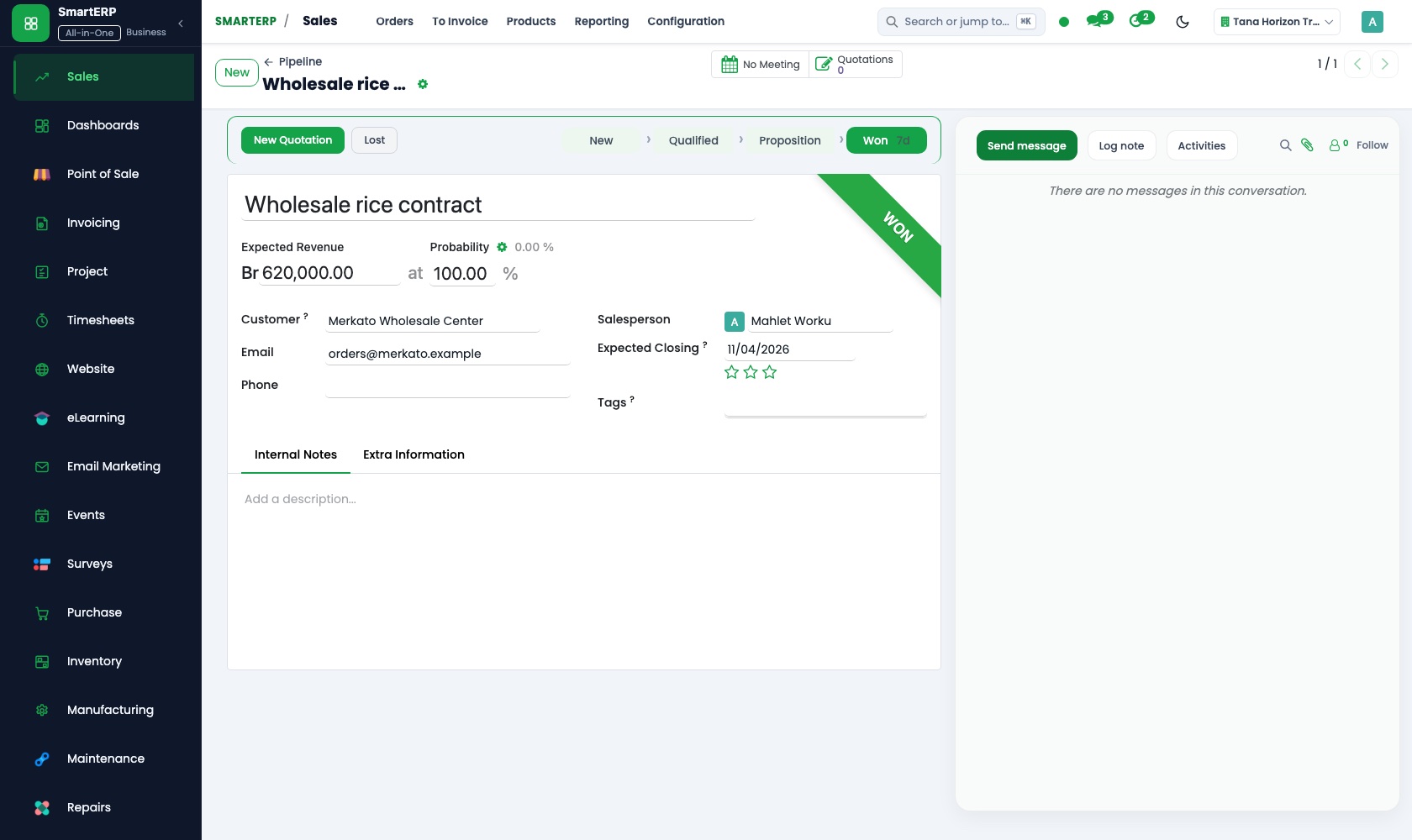
Repeat and OEM buyers are followed as opportunities with scheduled calls. The quotation is created from the opportunity, and the pipeline shows expected revenue by stage.
How the work runs on SmartERP
From a made-to-order request to a finished batch
A buyer's specification becomes a sales order, a production order that draws on the recipe, and finished stock with its yield known.
- Sales: Quotations and sales orders Confirm the quantity and specification with the buyer as one sales order that the production office can read.
- Manufacturing: Bills of materials Pick the recipe of components and operations for that product so the material need is known before anything starts.
- Manufacturing: Manufacturing orders Release a production order for the batch and follow it from draft to done.
- Manufacturing: Component consumption Record the materials actually drawn from stores for the batch, not only the planned quantities.
- Manufacturing: Production reporting Compare planned and actual use and output for the batch before the next run is priced.
From a low raw material to a paid supplier
A shortage is flagged against a minimum, the plant asks suppliers for prices, receives the goods and settles the bill.
- Inventory: Reorder rules Give each raw material a minimum so a shortage is raised before the line runs dry.
- Purchase: Requests for quotation Ask the usual suppliers of resin, flour, steel or thread to price the same quantity.
- Purchase: Purchase orders Place one order with the chosen supplier so stores and finance hold the same record.
- Inventory: Receipts and deliveries Book the goods into the raw material store when the truck is unloaded and counted.
- Accounting: Vendor bills and payments Pay the supplier against what actually arrived, by bank transfer or cash.
Your first month
- First week. We list your products with their components and quantities, load customers, suppliers and stock items, and agree which raw materials get a minimum first.
- Second week. Bills of materials are entered for your main products, raw material counts are loaded, and your accountant helps set the ledger and bank accounts.
- Third week. The production office releases one real batch: components are consumed, scrap is recorded, and the finished goods are received and invoiced.
- After go-live. We review planned against actual material use on the first batches with the owner and the foreman, then adjust recipes, minimums and price lists.
What to have ready
- Each product with its components, quantities and sub-assemblies
- Raw materials with units, current counts and the minimum you would set
- Regular suppliers with contacts and the materials each one supplies
- Repeat and OEM buyers with the prices and discounts agreed
- Opening balances and bank account details from your accountant
The applications on screen
Real SmartERP screens with sample data.
Who uses it
- Business owner or general managerSee the whole business and keep every department working on the same records.
- Finance and accountingInvoices, bills, bank and reports from one ledger.
- Purchasing and storesBuy, receive and control stock.
- Operations and productionPlan production, maintain equipment, deliver on time.
Company sizes
- 11 to 50 people
- 51 to 100 people
- 101 to 200 people
What SmartERP does not cover for this industry
SmartERP does not include finite-capacity machine scheduling, sensor or shop-floor data capture, inspection and test records against a specification, or salary calculation for factory staff. Keep those in separate tools beside it.
Questions about SmartERP for custom Industrial Equipment
Does SmartERP schedule machines or record inspections?
No. SmartERP does not include finite-capacity machine scheduling, shop-floor data capture or inspection records against a specification. Keep those in separate tools.
Can I compare planned and actual material use for a batch?
Yes. The manufacturing order plans components from the bill of materials, consumption records what was drawn from stores, and production reporting shows quantities and delays by product.
Where do rejects, offcuts and leftovers go in the books?
Record them as scrap or by-products on the manufacturing order, so what came out of a batch can be compared with what the bill of materials expected.
How do orders, production, stores and buying work together?
The production office reads the confirmed sales order and releases a manufacturing order. Components come from Inventory, Purchase covers the needs, and Accounting posts the bills. Maintenance can add a machine register later.
Does SmartERP calculate the salaries of factory staff?
No. SmartERP does not calculate salaries for factory staff. Payroll is available only through an implementation project, not in the standard cloud service.
See it before you decide
One made-to-order batch from sales order to finished stock
The walkthrough takes a repeat product from quotation through its bill of materials, a production order and component consumption, then shows the scrap and the finished stock, on sample data for a fictional plant.
There is no self-service sandbox. The demo is a guided walkthrough on sample data, or you can start a trial workspace.
Pricing
SmartERP has an industry edition for this sector (Manufacturing). The applications listed above are its applications, and the editions, their staff bands and the current prices are on the pricing page. This page shows no price.
See plans and pricingA website for your business
SmartERP can also set up a starter website for this kind of business, offered as part of a website project: Home, What We Make, Capabilities, Custom and OEM, Quality Control, Request a Quote, Contact. How the website tools work.
Start with what your business needs first
Tell us your industry and we carry it through the guided set-up, or talk to us first.
Start SmartERP Book a demo